Category Archives: Science & Technology

BHU start-up’s innovation makes a global mark

Banaras Hindu University.

Aquvio, a home grown start-up at Malaviya Centre for Innovation Incubation and Entrepreneurship (MCIIE), Indian Institute of Technology, Banaras Hindu University (IIT-BHU), has been shortlisted among the top 20 semi-finalists in the Global Cleantech Innovation Programme (GCIP)-India Chapter. Only two start-ups have been selected from UP.

Aquvio innovators and civil engineering graduates from IIT-BHU, Naveen Kumar and Rohit Kumar Mittal, participated in the GCIP at UN conference hall in New Delhi where they were appreciated for their water-efficient start-up. Notably, the entries are made under three clean technology areas comprising energy efficiency, renewable energy, waste to energy and water efficiency.

The IIT-BHU graduates came up with a cost-efficient reverse osmosis-based water filtration solution that delivers potable water and promises high recovery rate of raw water unlike other water purifiers that results in increased water wastage. Technology business incubator, MCIIE, and other including former director of IIT-BHU, SN Upadhyay, senior scientist at Institute of Radioecology and Radiation Protection, Hannover (Germany), Dharmendra Kumar Gupta and former professor at department of electronics engineering, IIT-BHU, MS Maun extended help and support to them. The shortlisted semi-finalists were intimated via e-mails following which they participated in the orientation programme held at New Delhi recently.

“We sent our entry for the Cleantech Open competition that provides entrepreneurs the facilitation needed to launch and create successful clean technology ventures and start-ups. We were intimated via e-mail that we had been shortlisted among the top 20 and participated in orientation programme in Delhi,” said an elated Naveen.

GCIP was launched in 2013 by ministry of MSME, United Nations Industrial Development Organisation (UNIDO) and Global Environment Facility (GEF) with support of Federation of Indian Chambers of Commerce and Industry.

One of the main objectives of the Indian Cleantech Competition is to equip entrepreneurs with critical skills that will enable them to take their innovation to the commercialization stage or to help them scale up their innovation.

The selected finalists will be brought together at Cleantech Open Global Forum in Silicon Valley, California.

source: http://www.timesofindia.indiatimes.com / The Times of India / News Home> City> Allahabad / TNN / July 07th, 2016
Rare text on earthquakes waits to be translated

Allahabad:

With government agencies and scientists concerned about the damage caused by earthquakes worldwide, there have been many attempts to identify the signals nature sends out before such occurrences.

In this backdrop, a manuscript, which is the conversation between Parasara and Gautama Rishi (sage) on laksana (symptoms) of Bhukampa (tremors) as mentioned in Matsya Puran (epic), is kept in the galleries of National Mission for Manuscript Delhi. The rare manuscript, if deciphered, could be of vital importance.

Titled ‘Bhukampalaksana’, this 8-page book was first found in the shelves of a library in Kashmir.

Talking about the manuscript, N C Kara, coordinator at the mission who was in the city for a 21-day workshop organised by Central Library of Allahabad University, said this manuscript was preserved in the department of municipal cooperation, Karnanagar, Kashmir.

He said the material of this rare manuscript is handmade paper and is written in Sharada script, the language of the manuscript being Sanskrit. Till today, however, the 8 pages of this book are waiting to be deciphered by a scholar well-versed in the Sharda script.

Beginning of the manuscript is missing as it could have got mixed with other manuscripts. “We would be initiating the process of search for the remaining parts of this rare manuscript and also for finding a scholar who could decipher this,” said Kar.

source: http://www.timesofindia.indiatimes.com / The Times of India / News Home> City> Allahabad / by Rajeev Mani / TNN / June 16th, 2016

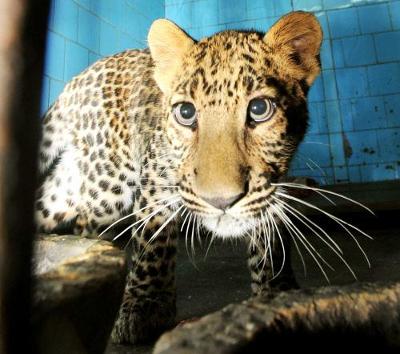
Kanpur zoo discovers new technique to document leopard blood values

Representative image.

Kanpur :

In the absence of documented values (such as platelets count, haemoglobin) of the blood of Indian leopards, the diagnosis of diseases in these big cats used to remain a tough task for the veterinarians. But the Kanpur zoo vets have found out the haematological values of blood of the leopard by conducting two tests.

These two tests were performed in October last year and in April this year. The findings might help in the diagnosis of diseases among leopards which are Schedule I animals and highly endangered species. RK Singh, UC Srivastava and Mohammad Nasir and pharmacist Akshay Bajaj of Kanpur zoo have worked to bring out the results of the study.

Senior veterinarian RK Singh said that the study has helped in knowing biological value interval of different haematological parameters. He said that now these values will work as a standard reference. “This study has been done on captive animals but it can work as a standard for the wild. However, a number of leopards should be screened to further establish these parameters,” he added.

source: http://www.timesofindia.indiatimes.com / The Times of India / News Home> City> Kanpur / June 01st, 2016

IIT-K makes UAVs with military applications

Kanpur:

Three smart multi-function unmanned aerial vehicles (UAVs) developed by the IIT-Kanpur have reportedly evoked a response from the Indian defence forces as they could possibly be used in military operations and are cheaper than those currently being sourced from foreign countries.

A defence team is expected to visit the institute soon to see a demonstration of the UAVs that could be used for surveillance in insurgency-hit areas as well as in battlefields for various operations. The UAVs are fitted with gadgets of various kinds, including electro-optical and thermal cameras and are ready for mass production, claimed IIT-K sources.

The first UAV has been named as SWATI or Silent Watch Aircraft For Tactical Intelligence. SWATI requires a small runway of only 50 to 80 meters to take off and can have a maximum take-off weight of 16 to 22 kgs. It could fly with either fuel or batteries. With petrol, it can stay in air for about eight hours and with batteries it has a four-hour endurance. It can keep an eye over an area of 100 kms.

Prof Philip has worked on the development of these UAVs along with Prof A K Ghosh, Prof Nischal Verma and Prof Satyaki Roy. A team of 30 students has also workedon these UAVs.

The second UAV is AMITA or Autonomous Man-packable Intelligent Tactical Aircraft and does not require a runaway to be launched. The light-weight AMITA can be carried in three backpacks. It can be hand-launched and weighs just six to eight kgs. It can remain in the air for more than three hours.

“The third UAV is solar-powered and is a bigger aircraft. A prototype of this UAV has been developed. It can get charged while flying and all its requirements would be met by solar power,” said Prof A K Ghosh adding, “75% of the power requirements of this UAV is met by solar energy, thus increasing its endurance.”

Prof Ghosh said that an expert team from defence forces is expected to come to IIT-Kanpur soon to witness the demonstration of these UAVs. He, however, declined to divulge further details.

source: http://www.timesofindia.indiatimes.com / The Times of India / News Home> City> Kanpur / by Abhinav Malhotra / TNN / May 25th, 2016

IIT Kanpur students develop kit to fight child sexual abuse

A team of five students of Indian Institute of Technology (IIT) Kanpur have developed a workshop kit to spread awareness about sexual abuse of children. (HT photo)

A team of five students of Indian Institute of Technology (IIT) Kanpur have developed a workshop kit to spread awareness about sexual abuse of children.

Sexual abuse among children, though rampant, remains a taboo subject in India. At least 46% children are subjected to sexual abuse, but most don’t report the assaults to anyone.

Jhumkee Iyengar, who is guiding the team, said the workshop kit is self-sufficient and can be used by anyone with basic communication skills, affinity towards children and an interest in educating kids – teachers, NGO volunteers and school counsellors.

The team comprising of Apoorva Aggarwal, Mitali Bhasin, Sneha Parhi, Sachin NP and Swayamsiddha Panigrahi said it was difficult for them to read about child sexual abuse and understanding the current situation was an emotionally draining process. (HT photo)

Iyengar is a faculty in the Design Program at IIT Kanpur where she teaches post-graduate design students a course that she conceptualised and created on Human Centered Design.

“Children in the age group of 8-12 years and in a group of 30-35 can be benefitted in a single session,” Iyengar said.

“The central message to kids is that being abused is not their fault and that they should freely discuss their problems with parents or teachers. Our underlying vision is to save a child’s innocence through knowledge,” the professor added.

The team developed the kit after extensive research and field studies, which included talking to psychologists, counsellors, teachers, parents and doctors along with holding focus group interviews in Kanpur slums. The initiative was a part of a year-long project that culminated in April 2015.

The workshop includes lessons on personal safety, respecting one’s body and overcoming guilt. It has been designed in a way such that it’s playful, educative and interactive, and also helps the teacher tackle the embarrassment that’s likely to accompany the subject.

“The content has been approved by subject experts and psychologists,” Iyengar said.

“We tested the product internally and iteratively as it was being defined and refined. It was also tested by the staff of an NGO on the children they serve. Pilot testing is being done in schools and the product is being further refined,” shared Prof Iyengar.

The team comprising of Apoorva Aggarwal, Mitali Bhasin, Sneha Parhi, Sachin NP and Swayamsiddha Panigrahi said it was difficult for them to read about child sexual abuse and understanding the current situation was an emotionally draining process.

“Sexual abuse has so many wrong notions attached to it. So, spreading awareness about this issue is definitely of paramount importance. For instance, the middle, upper middle class societies are quick to dismiss child sexual abuse as a problem of the lower classes,” Bhasin said.

Aggarwal said she too had gone through one such harrowing experience when she was a child.

“As a child, there were instances when I was subjected to uncomfortable scenarios that disturbed me for weeks but I was unable to react to the situation at the time. In retrospect, my parents always did everything in my best interests but something was missing,” Aggarwal said.

“While they spared no efforts to send me to the best school of the city, my mom, dad, sister – no one – ever told me how to guard myself from the world. Somewhere they hesitated in giving me that one important life lesson,” she added.

Currently available in English, the kit can be translated into different Indian languages.

source: http://www.hindustantimes.com / HindustanTimes.com / Home> Lucknow / by Rajeev Mullick, Hindustan Times,Lucknow / April 07th, 2016

IIT-K boy develops kettle that uses app to brew tea

Indian Institute of Technology Kanpur’s (IIT-K) Sachin Np has designed Ocha 2.0, a customisable tea maker. (Handout image)

If you are still brewing tea in a kettle then it’s time for you to switch to a tea maker that will make your brewing experience tech savvy.

Indian Institute of Technology Kanpur’s (IIT-K) Sachin Np has designed Ocha 2.0, a customisable tea maker which uses a mobile application to brew tea to suit the user’s taste buds and can be scheduled to keep a cup ready.

“Not everyone prefers the same tea that we get from a vending machine. Now, this is not a problem anymore. Brewing tea is now an art. In the case of Ocha 2.0, I have redefined the rules as art follows technology,” Sachin said.

His kettle is loaded with options such as customising and scheduling the tea as and when the user wants it to be ready. So, one can boil the water at the particular temperature they want and set an alarm the night before to keep the tea ready.

“It can be operated by the user in two different ways. Either with the help of the mobile application that comes along with the product or with the help of the user interface embedded onto the product. The kettle comes with a central display console comprising a display button placed right at the centre of the console that helps in selecting the various options in the menu,” he says.

It also has a control dial along with two push buttons that are embedded on its either side. The application also makes it possible to operate Ocha remotely with the help of Internet of things.

According to Sachin, brewing tea is a play between tea dust, infusion rate, the quantity of milk and the amount of sugar to give a cup of perfect tea. The existing tea makers are totally void of customisation, as even sugar and strength of tea is difficult to manipulate, he says.

“It also kills the spice up factor called aroma. Ocha 2.0 is a jack of all trades. It doesn’t miss out on any of these and is a cocktail of all the conventional brewing experiences. Opinion differs from one person to the other and so is the taste,” he says.

Sachin’s prototype of the kettle, which he developed within a year, helped him win A’ Design Award and Competition, the world’s largest design competition recognising the best designs, concepts, products and services. (Handout image)

His prototype of the kettle, which he developed within a year, helped him win A’ Design Award and Competition, the world’s largest design competition recognising the best designs, concepts, products and services.

“I believe design lies in everything that makes a user not to let think of its design. The design should be always like a fluid for a user that just flows flawlessly,” he said.

source: http://www.hindustantimes.com / Hindustan Times / Home> Lucknow / Rajeev Mullick, Hindustan Times,Lucknow / May 02nd, 2016

Allahabad boys’ ‘Garuda’ takes off with elan

Allahabad:

A six-member team of MNNIT has come up with an Unmanned Aerial Vehicle (UAV). The drone, developed in the shape of a bird, will be launched under Startup India programme.

Led by final year student of BTech, mechanical, Aswani Singh, the team’s multi-utility UAV is part of its final year project.

Talking to TOI, Aswani said, “The UAV made by us is inspired from mythological bird ‘Garuda’. The biggest problem with traditional drones is that they can easily be spotted whereas our ‘Garuda’ looks more like a bird and is invisible to the enemy.”

With a wing span of 1.5m, the drone weighs 700 gram. It can fly up to a height of 500 meters above the ground, and once fully-charged, it can cover a distance of over 8km at a speed of 80km/hr, added Aswani.

There are three types of UAVs, including the one with fixed wings (resembling airplane), Delta plane and multi-chopper, added Aswani. Other members of his team include Harsh, Anil, Akanksha , Dhwani and Sweety.

The drone can be carried in bag and assembled within a minute. It can fly for 20 minutes at a stretch, and once the power goes off, the drone gets charged in five minutes and is ready to fly again, he said. Flying at the top speed, the UAV takes perfect pictures as it is also fitted with vibration dampers, he added.

Currently, the UAV is controlled from a laptop, but the team is working on its mechanism so that the device can be operated from a tab or smartphone in future. We are working to increase the flying time as well as the range of the UAV, so that its utility increases, Singh said.

The drone would cost around Rs 50,000, he said, adding that we will be imparting training to our customers so that they can repair the UAV themselves. This will help reduce the cost of maintenance.
The team had recently trained 29 schoolkids.

source: http://www.timesofindia.indiatimes.com / The Times of India / News Home> City> Allahabad / TNN / April 29th, 2016

‘Bael seeds can help fight diabetes’

Allahabad:

Scientists of Allahabad University led by Geeta Watal have found that the seeds of bael have qualities to fight diabetes.

Those suffering from diabetes often refrain from having drinks made from the pulp of ‘bael’ (aegle marme-los), oblivious of the fact that the seeds of this fruit are beneficial in controlling diabetes and also bring down cholesterol level.

In their research paper published in the Journal of Ethnopharmacology, the scientists have reported that the extract from bael seeds bring down the level of blood glucose up to 60.84% and that too just after a fortnight of consumption of the extract.

The extract was derived after drying the seeds and making its powder.

The powdered extract was boiled in water and administered to rats. When a chronic diabetic rat was administered the dose of 250 mg for 14 days, its FBG level came down by 64.84% and the urine sugar came down by 75% as compared to the pre-treatment level.

The seeds of bael have also shown promising results in terms of benefiting the patients suffering from high blood pressure as the extract of this seed reduces the level of cholesterol.

“Our results show that the total cholesterol (TC) came down to 25.49% and the high density lipoprotein (HDL) increased by 33.43% and low density lipoprotein (LDL) decreased by 45.77%.

It means that patients suffering from high blood pressure are likely to get benefited by consuming the extract,” Watal said.

With mercury soaring high, sale of drinks like ‘panna’ and ‘bael sharbat’ is on the rise.

source: http://www.timesofindia.indiatimes.com / The Times of India / News Home> City> Allahabad / April 17th, 2016

AU scholar turns flower waste into scented dyes

Allahabad:

A research scholar of the Allahabad University (AU) has created scented dyes from the petals of marigold and rose dumped outside city temples. The dyes have been accepted for patent and the research could help check pollution in rivers where tons of flowers are thrown after puja.

The dyes — yellow from marigold and pink from rose — have been prepared by Manpreet Kalsy, a research scholar under head of the department Prof Sangeeta Srivastava. The patenting authority has issued temporary patent numbers 27/DEL/2015 and 253/DEL/2015 for dyes prepared from marigold and rose respectively.

“The two scented dyes have been prepared under controlled lab conditions and tested on silk. They could be used for a number of times after being prepared and the dyed fabric would retain the fragrance for over six months,” said Manpreet.

“Huge quantity of flowers are offered in temples daily and later dumped in rivers, adding to environmental pollution. This gave us the idea of utilising used flowers. Our research is aimed at extracting natural colour from this huge quantity of floral waste,” said Prof Srivastava.

Natural dyes are one which are eco-friendly, biodegradable and non-toxic in nature. Moreover, the dyes prepared by us are antioxidant and antimicrobial in nature, she added.

Manpreet, a junior research fellow (JRF) who has done this work along with her guide, said: “The samples for preparing these dyes were specifically collected from the major temples of the city besides the banks of the Ganga because it was this menace that we wanted to handle. We are confident that at least one of the major sources of river pollution, ie, marigold and rose, could be used for colouring silk.”

Silk could be the fabric of choice as it is used for bridal dresses and scented dye would add to the fragrance, she added.

source: http://www.timesofindia.indiatimes.com / The Times of India / News Home> City> Allahabad / Raveev Maini / TNN / April 12th, 2016

Now, cheaper surgery for kidney stones

Lucknow:

Patients needing surgery for removal of kidney stones will have to spend less money now following re-development of a key equipment used in the process.

The appliance is called dilator and has been devleoped by Dr Diwaker Dalela, a consultant in urology department atKGMU. Appreciated for surgical precision by different urological societies, the device cuts down the price of stone removal surgery by 70%.

Dr Dalela said he has applied for a patent on the equipment. “to remove kidney stones, surgeons create an access between abdomen and kidney using a dilator.”

The traditional one has 10 screw like pins are inserted one at a time which took time and led to blood loss which is prevented by this dilator.

source: http://www.timesofindia.indiatimes.com / The Times of India / News Home> City> Lucknow / TNN / April 08th, 2016